Lushoto is one of Tanzania’s best-kept secrets. Nestled in the Western Usambara Mountains in the Tanga Region — one of the world’s most biodiverse areas and a place of breath-taking natural beauty — it is also home to some of East Africa’s most meaningful and well-organised volunteer programmes. If you have been searching for a volunteer experience that is real, impactful, community-rooted, and genuinely life-changing rather than superficial, this guide was written for you. By the end, you will know exactly what volunteering in Lushoto involves, what to expect, how much it costs, how to stay safe, and precisely how to apply with C.Y.D.O — the organisation that has been running community and environmental volunteer programmes here since 2011.
Before you can understand why volunteering in Lushoto matters, you need to understand what Lushoto is. Most people who have not been to Tanzania think of Serengeti, Kilimanjaro, and Zanzibar. Lushoto is different — quieter, cooler, greener, and deeper.
Lushoto is the administrative centre of the Lushoto District in Tanzania’s Tanga Region, situated in the Western Usambara Mountains at approximately 1,500 metres above sea level. The Usambaras are among the oldest mountain ranges in Africa — older than the Amazon rainforest — and they are classified as one of the world’s most critical biodiversity hotspots, home to hundreds of endemic species of plants, birds, reptiles, and amphibians found nowhere else on earth.
The climate is mild and green year-round. The landscape is a patchwork of forest reserves, tea and spice plantations, small farms, and traditional villages. The people — predominantly from the Sambaa (Wasambaa) indigenous community — are known across Tanzania for their warmth, their complex agricultural knowledge, and their deep relationship with the land.
1,500maltitude — cool, green, year-round
2011C.Y.D.O founded in Lushoto
500+community projects completed
25+communities served
This is the setting for C.Y.D.O’s volunteer programmes — not a sanitised tourist attraction, but a working community with real needs, real challenges, and extraordinary capacity for resilience and growth when supported well.
C.Y.D.O — Changamoto Youth Development Organization — has been operating community and environmental programmes in Lushoto and across the Tanga Region since 2011. The organisation is registered with Tanzania’s NGO Coordination Board (Reg. #21NGO/0004747) and has a strong track record of hosting international and domestic volunteers in structured, meaningful placements.
C.Y.D.O’s volunteer programmes fall into five main areas. Most volunteers participate in more than one, depending on the duration of their stay and their skills and interests.
- Environmental and Reforestation Volunteering
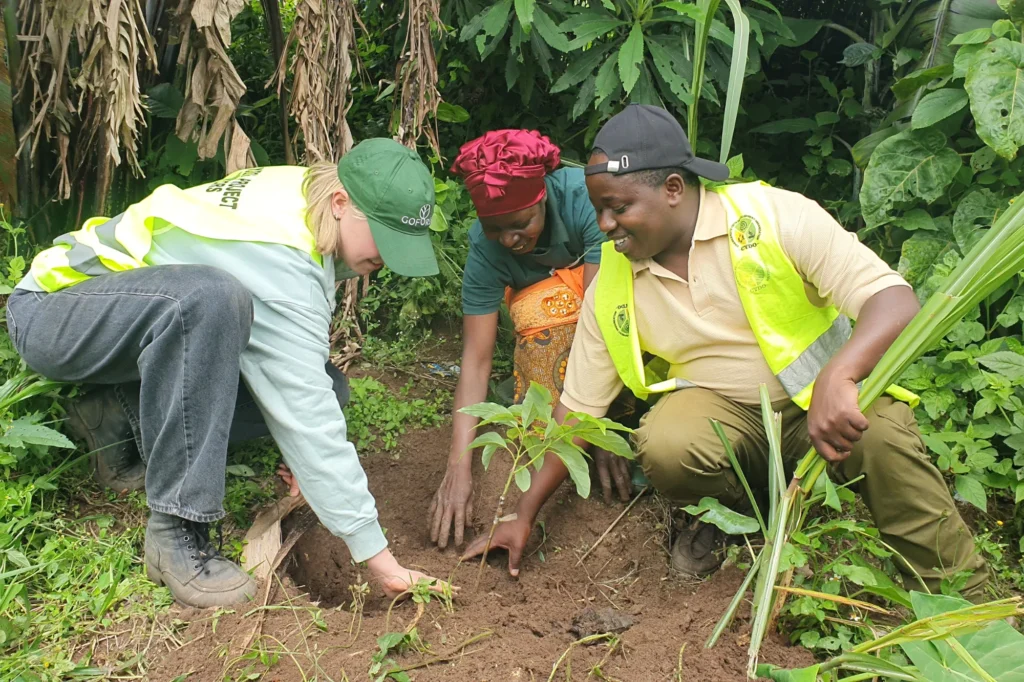
This is C.Y.D.O’s flagship volunteer programme and the one most closely tied to its core mission. Volunteers work alongside Tanzanian youth and community members on active reforestation projects across the Usambara Mountains and Tanga Coast. Activities include tree nursery operations — from seed collection and germination to seedling management — planting days at project sites including the Shagayu Forest Reserve and the Pangani River Basin, biodiversity monitoring and tree survival surveys, and community environmental education workshops in local schools and villages.
No prior environmental or botanical knowledge is required. C.Y.D.O’s field staff provide full training. What volunteers bring is energy, commitment, and a willingness to get their hands in the soil.
- School Renovation and Education Support
Rural schools across the Lushoto and Tanga districts often lack basic infrastructure — classrooms with peeling walls, broken furniture, bare schoolyards, and absent learning materials. C.Y.D.O’s school renovation volunteer programme places volunteers in hands-on renovation work: painting classrooms, repairing furniture, planting school gardens and fruit trees, and providing learning materials.
Volunteers with teaching skills or subject knowledge in English, mathematics, sciences, or ICT are also placed in schools to support existing teachers — never to replace them, but to add capacity and new perspectives that benefit students directly.
- Youth Skills Training Support
Volunteers with backgrounds in agriculture, business, environmental science, nutrition, health, or community development can support C.Y.D.O’s youth skills training cohorts. This might involve co-facilitating practical workshops, providing one-to-one mentoring to youth entrepreneurs, assisting with business plan development, or contributing specialist knowledge in areas where C.Y.D.O’s staff want to strengthen their programmes.
- Community Development Projects
C.Y.D.O runs a range of grassroots community development projects across 25+ communities in the Tanga region — including water access improvement, waste management initiatives, community health education, and women’s economic empowerment programmes. Volunteers with relevant skills and experience are welcomed into these projects as collaborative partners.
- Cultural Immersion and Agri-Tourism Experience
One of C.Y.D.O’s most distinctive and sought-after volunteer offerings is the indigenous family homestay programme. Volunteers live with Wasambaa families in traditional villages in the Usambara Mountains, participating in daily agricultural and domestic life, learning basic Swahili, exploring the mountains’ extraordinary trails and forest reserves, and experiencing Tanzanian community life from the inside.
This is C.Y.D.O’s most unique offering: Living with indigenous families in the Usambara Mountains is not available through mainstream volunteer platforms or travel agencies. It is an experience offered exclusively by C.Y.D.O — and volunteers consistently describe it as the most memorable aspect of their time in Tanzania.
Who Can Volunteer? Eligibility and Suitability
C.Y.D.O’s volunteer programmes are genuinely inclusive. There is no single profile of the ideal volunteer — the organisation has successfully hosted retired professionals, gap-year students, career changers, development sector workers, families, and independent travellers from across the world.
Volunteer Type | Ideal Programme | Minimum Duration |
Gap year / student | Environmental, school renovation, cultural immersion | 2–4 weeks |
Career professional | Skills training support, community development | 1–2 weeks |
Environmental / science background | Reforestation, biodiversity monitoring | 2–6 weeks |
Teacher / educator | School support, youth training facilitation | 2–4 weeks |
Families with children 12+ | Cultural immersion, light community projects | 1–2 weeks |
Corporate / CSR groups | School renovation, tree planting days, community projects | 3–7 days |
The minimum recommended duration for a meaningful experience is two weeks. Shorter stays are possible — and C.Y.D.O offers shorter cultural and environmental immersion experiences — but two weeks is where you move from visitor to genuine contributor. Many volunteers extend their original duration once they arrive.
Transparency about costs is important. C.Y.D.O operates on the principle that volunteer programme fees should be honest, fair, and clearly explained — covering exactly what they cover and nothing more.
Programme Fees
C.Y.D.O charges a programme contribution fee for international volunteers. This fee covers accommodation (either at C.Y.D. O’s guesthouse in Lushoto or with a host family), three meals per day, in-country project transportation, the cost of materials and resources for the projects you work on, and the fair wages of C.Y.D.O’s Tanzanian staff who design, supervise, and run your programme. Contact C.Y.D.O directly at info@changamotoyouth.org for current programme fee schedules — fees vary by programme type and duration.
What Is Not Included
- International flights to Tanzania (fly into Dar es Salaam or Kilimanjaro Airport)
- Tanzanian visa (available on arrival for most nationalities — currently USD $50)
- Travel insurance (required — C.Y.D.O strongly recommends comprehensive travel and medical insurance)
- Personal spending money for souvenirs, extra excursions, and leisure activities
- Yellow fever vaccination certificate (required to enter Tanzania from most countries)
Getting to Lushoto
Lushoto is well-connected and straightforward to reach. From Dar es Salaam: take a bus or shared taxi (dala-dala) to Mombo (approximately 5–6 hours), then a short bus or taxi to Lushoto (approximately 45 minutes, 36km on a scenic mountain road). From Tanga: approximately 2 hours by bus. C.Y.D.O can arrange airport pick-up from Dar es Salaam or Tanga for an additional fee, and provides detailed arrival instructions to all confirmed volunteers.
Safety, Health, and What to Expect on the Ground
One of the most common questions from prospective volunteers — particularly those who have never been to East Africa — is about safety. The honest answer about Lushoto is: it is one of the safest places in Tanzania for international visitors.
Lushoto is a small, rural town. It does not have the petty crime pressures of Dar es Salaam or the tourist-targeting that occurs in busier destinations. The community is welcoming and accustomed to international visitors through C.Y.D.O’s longstanding presence. C.Y.D.O staff provide comprehensive safety orientations for all volunteers on arrival and are available around the clock for any concerns.
Health Considerations
- Malaria: Tanzania is a malaria zone. Take anti-malarial medication as directed by your doctor. Sleep under a mosquito net (provided by C.Y.D.O).
- Water: Drink bottled or filtered water only. C.Y.D.O provides filtered water at all accommodation.
- Altitude: Lushoto at 1,500m is higher than most volunteers expect. Mild altitude adjustment (light headache, fatigue) is possible in the first day or two — it passes quickly.
- Vaccinations: Beyond yellow fever (required), your doctor may recommend hepatitis A and B, typhoid, and meningitis vaccinations. Consult a travel health clinic 6–8 weeks before departure.
- Food: C.Y.D.O provides safe, locally prepared meals. Tanzanian food is genuinely delicious — expect rice, beans, fresh vegetables, ugali, chapati, and local fruits.
A Typical Week as a C.Y.D.O Volunteer in Lushoto
Many volunteers want to know what a typical week looks like before committing. Here is a realistic picture of a week on C.Y.D.O’s environmental reforestation programme.
Day | Morning | Afternoon | Evening |
Monday | Orientation, site briefing, meet the team | First nursery session — seed preparation | Community dinner, language introduction |
Tuesday | Tree nursery — potting and watering | Forest trail walk with local guide | Free time, journal, stargazing |
Wednesday | Planting day at Shagayu Reserve site | Planting continues, GPS recording | Debrief with C.Y.D.O field team |
Thursday | School visit — garden planting with students | Environmental education session | Community gathering — traditional music |
Friday | Nursery maintenance and survival monitoring | Visit to VICOBA women’s group meeting | Volunteer reflection and weekly review |
Weekend | Optional: hiking the Usambara trails, visiting local markets, waterfall walks, Lushoto town exploration |
No two weeks are identical. C.Y.D.O adapts volunteer schedules to match the season, active project phases, and each volunteer’s specific skills and interests. What stays constant is the rhythm of meaningful work in the morning, community connection in the afternoon, and genuine rest and exploration in the evenings and on weekends.
🌍 Volunteer Voice: Mia, Netherlands — 3-Week Environmental Programme
“I had volunteered in Ghana and Uganda before, so I had some experience with community programmes in Africa. But Lushoto and C.Y.D.O surprised me completely. The level of organisation, the clarity of what we were doing and why, the genuine relationships with local staff — it was the most professional and meaningful volunteer experience I have had. And the mountains. I did not expect to spend three weeks somewhere so completely beautiful. I went home planning to come back.”
How to Apply to Volunteer With C.Y.D.O in Lushoto
The application process is straightforward. C.Y.D.O does not require lengthy online forms or complex selection processes — they require genuine interest and commitment.
- Send an initial enquiry.Email info@changamotoyouth.org with your name, nationality, intended dates, programme interests, and a short description of your background and motivation. You can also reach C.Y.D.O by phone or WhatsApp at +255 718033646.
- Receive a tailored programme proposal.C.Y.D.O will respond within 2–3 working days with a programme proposal matched to your dates, skills, and interests — including a fee breakdown and accommodation options.
- Confirm your placement.Once you agree on the programme details, confirm by paying a placement deposit. This secures your dates and triggers C.Y.D.O’s preparation for your arrival.
- Receive your pre-arrival pack.Detailed practical information covering transport, what to bring, health preparation, safety guidance, and what to expect on your first day.
- Arrive and begin.C.Y.D.O’s team will meet you and provide a thorough orientation before your programme begins. From day one, you are part of the team.
Best time to apply: Apply at least 4–6 weeks before your intended start date. Peak volunteer season is June–August and December–January (gap year season in the northern hemisphere). During these periods, placements fill quickly — book early to secure your preferred dates.
Lushoto Is Waiting for You.
There are very few places in the world where you can plant endangered trees in a globally irreplaceable forest in the morning, share a meal with an indigenous family in the afternoon, and watch the most extraordinary night sky of your life in the evening. Lushoto is one of them. C.Y.D.O is your way in.
C.Y.D.O | Lushoto, Tanga, Tanzania |+255 718033646 | changamotoyouth.org
Frequently Asked Questions (FAQs)