Numbers matter. But the real story of community development in Tanzania is told in the details — the freshly painted classroom where a girl decides to become a doctor. The savings group where a widow starts her first business. The restored hillside, where a community has not seen trees for thirty years.
C.Y.D.O has completed 500+ community development projects across Tanzania since 2011. Here are some of the stories behind those numbers.
Story 1: The School That Became a Community Landmark
Nkwene Primary School in Tanga Region had not seen a lick of paint in over a decade. Classrooms were dark, walls were crumbling, and the compound had no shade trees. Teachers struggled to motivate students in an environment that communicated neglect.
C.Y.D.O mobilised a team of local youth volunteers and international volunteers to repaint every classroom, repair broken furniture, install a new flagpole, and plant 20 fruit trees around the compound. The transformation took four days.
Today, Nkwene Primary School is one of the best-looking schools in the district. Enrolment has increased. A local teacher told us: ‘The children come to school earlier now. They are proud of their school.’
Story 2: How VICOBA Changed a Village
In Kilindi District, a group of 15 women from three neighbouring villages came to C.Y.D.O’s VICOBA financial literacy training with little more than hope. Most had never had a bank account. Several had never handled more than a few thousand Tanzanian shillings at once.
Twelve months later, the group had saved over 2 million Tanzanian shillings collectively, disbursed microloans to six members who started small businesses, and elected their own chairwoman — a single mother of four who now runs a flour-milling business that employs two people.
‘VICOBA did not give us money,’ she told us. ‘It taught us to build it ourselves.’
Story 3: The Forest That Came Back
Twenty years ago, the hillside above Mlola village in the Usambara Mountains was covered in dense forest. Then charcoal production, firewood cutting, and agricultural expansion stripped it bare. Springs that had fed the village for generations dried up. Soil eroded. Crops failed.
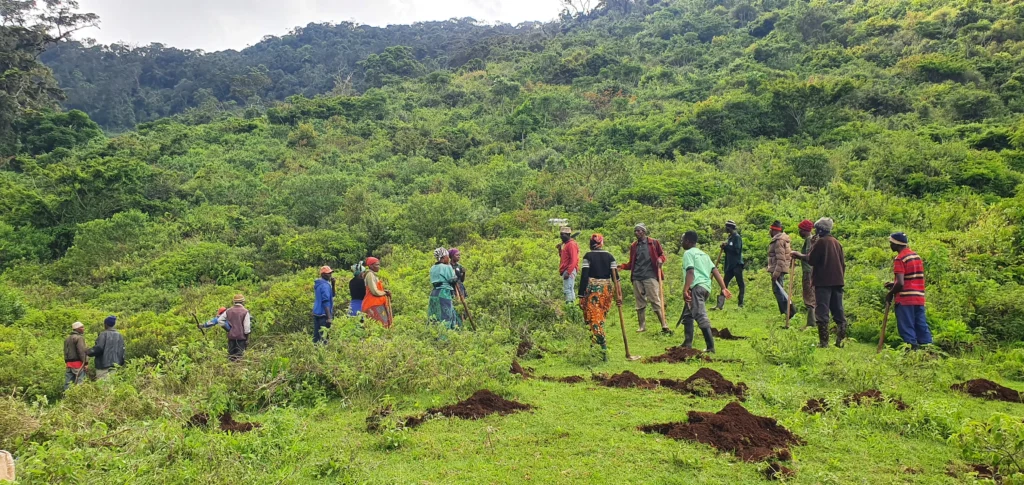
C.Y.D.O partnered with the Mlola village council to establish a community tree nursery, train 30 youth as reforestation workers, plant 15,000 indigenous trees on the degraded hillside over two seasons, and establish a community by-law protecting the restored area.
Three years later, the hillside is green again. Two springs have returned. The village has formed its own forest committee. Young people who planted the first trees are now teaching their younger siblings to do the same.
Story 4: A Youth Who Found His Purpose
Ahmed was 19 when he first came to C.Y.D.O’s skills training program. He had finished secondary school but had no income, no plan, and no hope of finding formal employment in Lushoto. He enrolled in our agroforestry and nursery management training — more out of curiosity than expectation.
Two years later, Ahmed runs his own tree nursery, supplying indigenous seedlings to reforestation projects in three districts. He employs two younger people. He has been invited to speak at a regional agricultural exhibition. He is planning to expand.
‘C.Y.D.O gave me the skills,’ he says. ‘But more than that, it gave me a reason to stay in my village and work for its future.’
What Makes C.Y.D.O's Community Development Projects Different
Tanzania has many NGOs running community development projects. What makes C.Y.D.O’s approach distinctive is our deep commitment to community ownership over external delivery, our integration of environmental conservation with social and economic development, our long-term presence in communities rather than one-off interventions, our use of local staff, local languages, and locally appropriate methods, and our transparency in reporting results — including failures and lessons learned.
We do not just complete projects. We build the community capacity to sustain and grow them long after C.Y.D.O has moved on.
Get Involved in Community Development in Tanzania
Every community development project C.Y.D.O undertakes is made possible by the support of donors, volunteers, and partners who believe in Tanzania’s communities and their potential.
- Donate to fund a specific community project at changamotoyouth.org/donations
- Volunteer to join our field teams in Lushoto, Tanga
- Partner with C.Y.D.O through your organisation’s CSR or development program
- Share our stories to help more people discover what is possible
Tanzania’s communities are strong, resilient, and full of potential. With the right support, there is no limit to what they can achieve. Visit changamotoyouth.org to learn more.